MV BARIMA INQUIRY REVEALS DISTRESS ALERT TIMELINE AS COAST GUARD RESCUED 26 PEOPLE
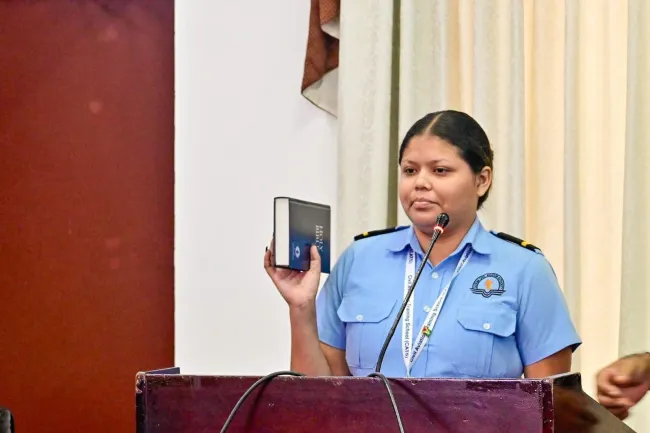
GEORGETOWN, GUYANA | OCTOBER 14, 2026 — The Commission of Inquiry (COI) into the MV Barima maritime tragedy heard detailed testimony on Wednesday outlining how a satellite distress signal triggered an emergency response involving aviation authorities and the Guyana Defence Force (GDF) Coast Guard, resulting in the reported rescue of 26 people by the following morning.
According to testimony presented during the hearing, the first distress notification was received at 10:43 p.m. on July 18, 2026, from the United States Mission Control Centre in Suitland, Maryland. The centre, managed by the National Oceanic and Atmospheric Administration (NOAA), processes satellite emergency signals and forwards them to the relevant authorities.
Officers at the Cheddi Jagan International Airport control tower immediately began identifying the coordinates associated with the distress beacon and relaying the information to the GDF Coast Guard. However, witnesses disclosed that the beacon’s registration record did not contain the vessel owner’s contact information or details identifying it as belonging to the MV Barima, limiting the authorities’ ability to establish the nature of the emergency.
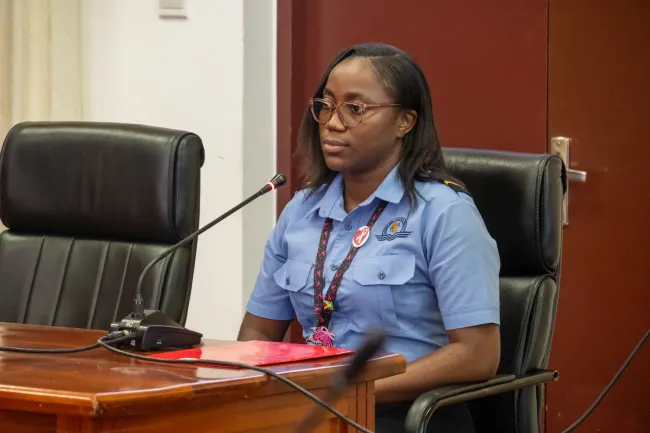
Aeronautical Information Services Officer Tia Valenzuela, who was on duty at the Timehri control tower, testified that an audible alarm alerted personnel to the incoming distress message. At 10:51 p.m., eight minutes after the initial alert, she transmitted the beacon’s coordinates to the Coast Guard’s operations mobile phone through WhatsApp. According to her testimony, the Coast Guard acknowledged the information within one minute.
Valenzuela subsequently notified the lighthouse at 11:01 p.m. and Commander David Shamsudeen at 11:07 p.m. By 11:13 p.m., the Coast Guard had advised that one of its vessels was heading toward the reported distress location. Additional satellite alerts continued arriving throughout the night, requiring officers to acknowledge each message and provide updated coordinates to the rescue teams.
Aeronautical Information Services Officer Saskia Trapp, who assumed responsibility for monitoring the alerts shortly before midnight, told the commission that she continued communicating updated positions to the Coast Guard. At 12:36 a.m. on July 19, Trapp contacted the Coast Guard with the latest coordinates, and at 1:34 a.m., she was informed that another patrol had been dispatched from Coast Guard headquarters.
The witness said she continued relaying updated positions until 2:37 a.m., although the final satellite alert had been detected at approximately 2:09 a.m. When questioned, Trapp said she could not explain why the distress beacon stopped transmitting.
At approximately 5:30 a.m., Trapp received a WhatsApp message from Coast Guard Operations confirming that a rescue vessel had reached the search area and that 26 people had been saved.
“Please be informed that GDF 1034 is at the search and rescue location after saving 26 persons. Search is still ongoing,” the message stated.
The commission was told that the missing beacon registration details prevented officers from directly contacting the vessel’s owner or determining how many passengers and crew members were aboard. Nevertheless, Trapp maintained that every satellite distress alert is treated as an emergency requiring immediate attention.
Both aviation officers explained that their responsibilities involved receiving distress notifications, forwarding coordinates and documenting communications, while the Coast Guard was responsible for conducting the maritime rescue operation.
Director of Air Navigation Services Rickford Samaroo also testified that, around 1 a.m., he was informed by the authority’s Director General that two aircraft had been dispatched to investigate the emergency.
Following the testimony, the commission requested operating procedures, an after-action report and the complete communications record to assist its examination of the emergency response. The evidence is expected to help investigators establish the sequence of events, assess communication procedures and evaluate the effectiveness of the search-and-rescue response following the vessel’s distress signal.
While Wednesday’s testimony provided a timeline of the initial emergency communications and reported rescues, it did not establish the cause of the sinking or determine whether the overall emergency response was adequate.
The Commission of Inquiry continues its public hearings on Thursday, October 15, at the Arthur Chung Conference Centre.

STAFF WRITER
Senior journalist and investigative reporter for NewsGuyana24 covering national affairs, energy governance, and Caribbean diplomacy.
View All Articles By STAFF WRITER →