
GUYANA TARGETS LITTERING AS TOURISM GROWTH PUTS ENVIRONMENTAL PROTECTION IN FOCUS

GEORGETOWN, GUYANA | OCTOBER 9, 2026 — As Guyana’s tourism industry continues to expand, authorities are stepping up efforts to address littering through public education and stronger enforcement, amid concerns about the impact of improper waste disposal on the country’s environment and tourism appeal.
Director of the Guyana Tourism Authority (GTA), Kamrul Baksh, acknowledged that littering remains a longstanding challenge requiring greater public responsibility and coordinated action.
Speaking to reporters during the State of the Tourism Industry Conference (SOTIC) at the Atlantic Suites by Hyatt in Georgetown, Baksh said government agencies are taking steps to improve cleanliness and strengthen enforcement.
“The trash problem that we speak about globally, it is a problem and it is something that we at the government level are intervening on,” he stated.
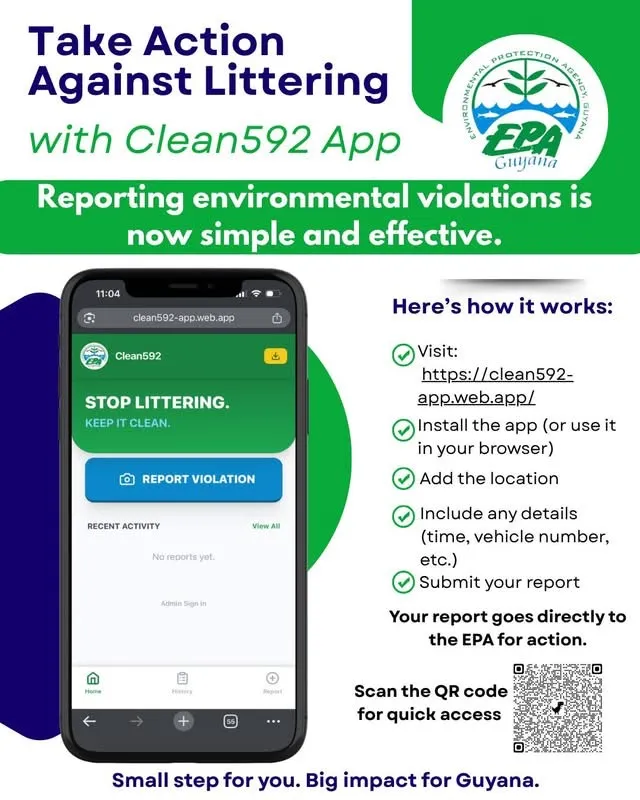
According to Baksh, public awareness campaigns must be supported by penalties for individuals caught littering. He also highlighted efforts by the Environmental Protection Agency (EPA) to identify offenders through publicly shared video footage.
The renewed focus on environmental protection comes as Guyana experiences continued tourism growth, with visitor arrivals maintaining strong momentum during the first nine months of 2026.
Baksh reported that Guyana has hosted more than 20 conferences and exhibitions this year, attracting over 20,000 attendees, including more than 12,000 international visitors travelling specifically for conferences.
He emphasised that preserving Guyana’s rainforests, rivers, wildlife and cultural heritage is essential to maintaining the country’s appeal as a tourism destination.
With approximately 80 per cent of Guyana covered by rainforest, environmental conservation remains a central component of the country’s tourism strategy.
The GTA director also highlighted the importance of Indigenous communities in developing sustainable tourism, noting that community-based tourism allows residents to manage tourism businesses and reinvest earnings into local development.
“The communities own the land, they own the assets, they run the business, they control the profits, they reinvest the profits,” Baksh explained.
Meanwhile, the GTA is advancing sustainability standards for accommodation providers and tour operators, alongside plans for a national tourism policy to guide the industry’s development over the next five years.
As Guyana seeks to attract more international visitors, the challenge for authorities will be ensuring that tourism expansion is accompanied by effective environmental protection, consistent enforcement and greater public participation in keeping communities clean.

STAFF WRITER
Senior journalist and investigative reporter for NewsGuyana24 covering national affairs, energy governance, and Caribbean diplomacy.
View All Articles By STAFF WRITER →